Biosafety laboratories (BSL labs)

Why pressure monitoring is critical:
In biosafety laboratories (BSL labs), controlling airflow and pressure is critical to protect laboratory staff and prevent exposure of the surrounding environment to hazardous biological agents.

  • In BSL-2 and BSL-3 labs, negative pressure ensures inward airflow, preventing the release of potentially dangerous pathogens into adjacent spaces.
  • In BSL-4 labs, even stricter containment is required, often combining negative pressure with specialized air filtration systems and airlocks.

For all these laboratories, it’s essential to meet biosafety guidelines and demonstrate compliance during audits, validations and inspections. Whether protecting against biological hazards or ensuring contamination-free workflows, continuous pressure monitoring is essential.
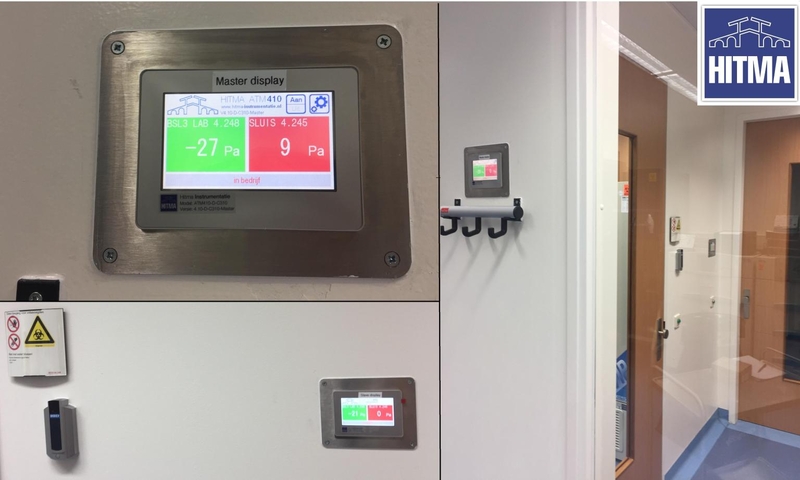

Why Choose the ATM420:

  • Continuous monitoring of differential pressure between:
    • Corridor and anteroom/airlock (measured by one differential pressure transmitter)
    • Corridor and isolation room (measured by second differential pressure transmitter)
  • Immediate visual feedback with clear green = safe and red = alarm indicators.
  • Optional audible alarm with adjustable time delay, preventing unnecessary alarms when doors briefly open.
  • Optional slave display inside the airlock, allowing staff to check room status before entering the BSL Labs
  • Maintenance / cleaning mode – Activated via a secure code, the display switches to grey, indicating the system is temporarily paused. This mode is ideal during cleaning, calibration, or system maintenance.
  • Easy to install and intuitive to use – designed for both technical staff and lab managers, and cleanroom operators.
  • Fully compatible with Building Management Systems (BMS) for centralized logging and control, if needed.
  • Equipped with high accuracy differential pressure transmitters that offer two standard analog outputs (4…20mA and 0…10V), allowing seamless connection to variable air volume controllers (VAV) or Building Automation Systems (BAS).
  • Optional Modbus RTU output for advanced integration — monitor display status remotely and even adjust alarm settings from your central system.
With ATM420, biosafety officers, lab managers, and technicians can rely on clear, real-time feedback about critical pressure conditions — ensuring safe containment and compliance with biosafety standards.